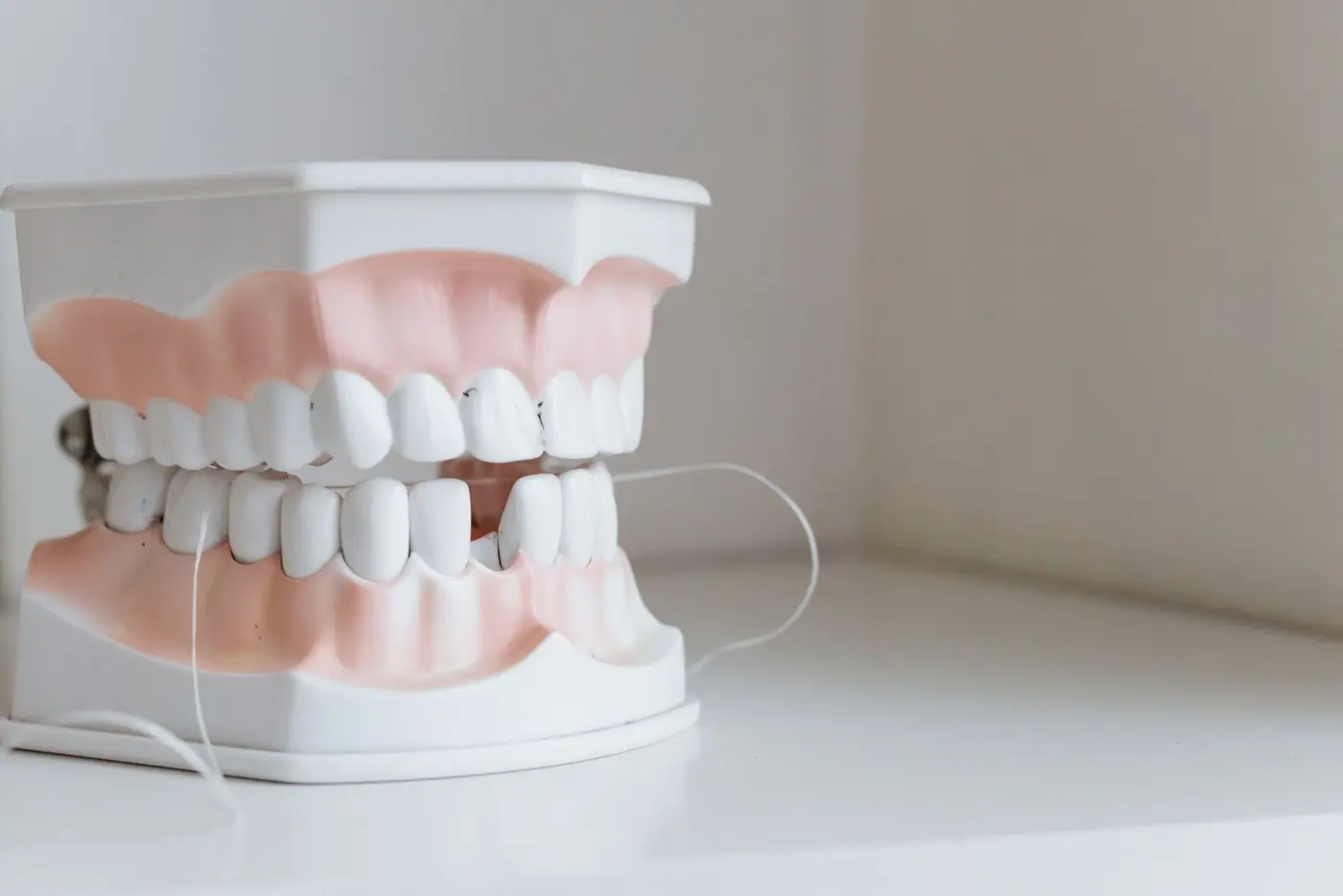
Caring for dental implants: daily cleaning and professional maintenance
 By Dr. med. dent. Hasan Coşkun · Dentist, 20 years of practice in Germany
8 October 2026 · 5 min read
The best protection for a long-lasting implant starts not in the dental chair but in your own bathroom – complemented by regular professional check-ups. The good news: care is not complicated, it just needs to be consistent.
Why care matters so much with implants
Bacterial plaque is the main cause of inflammation around implants. According to the consensus report there is strong evidence that poor plaque control and lack of maintenance increase the risk of peri-implantitis (see Preventing peri-implantitis).
Daily cleaning at home
- Brush twice a day, including around the implant crown and along the gum line.
- Clean between the teeth – with interdental brushes of the right size or implant floss. The Scottish SDCEP guidance also recommends these aids.
- With fixed bridges and All-on-4 restorations: clean underneath the bridge too. Ask to be shown the right technique.
- Water irrigator as an extra: according to the EFP guideline it can be considered in addition to professional cleaning.
The 2023 EFP guideline recommends tailoring oral hygiene instruction to the individual patient and restoration. Ask for a demonstration for your specific situation.
Professional maintenance (recall)
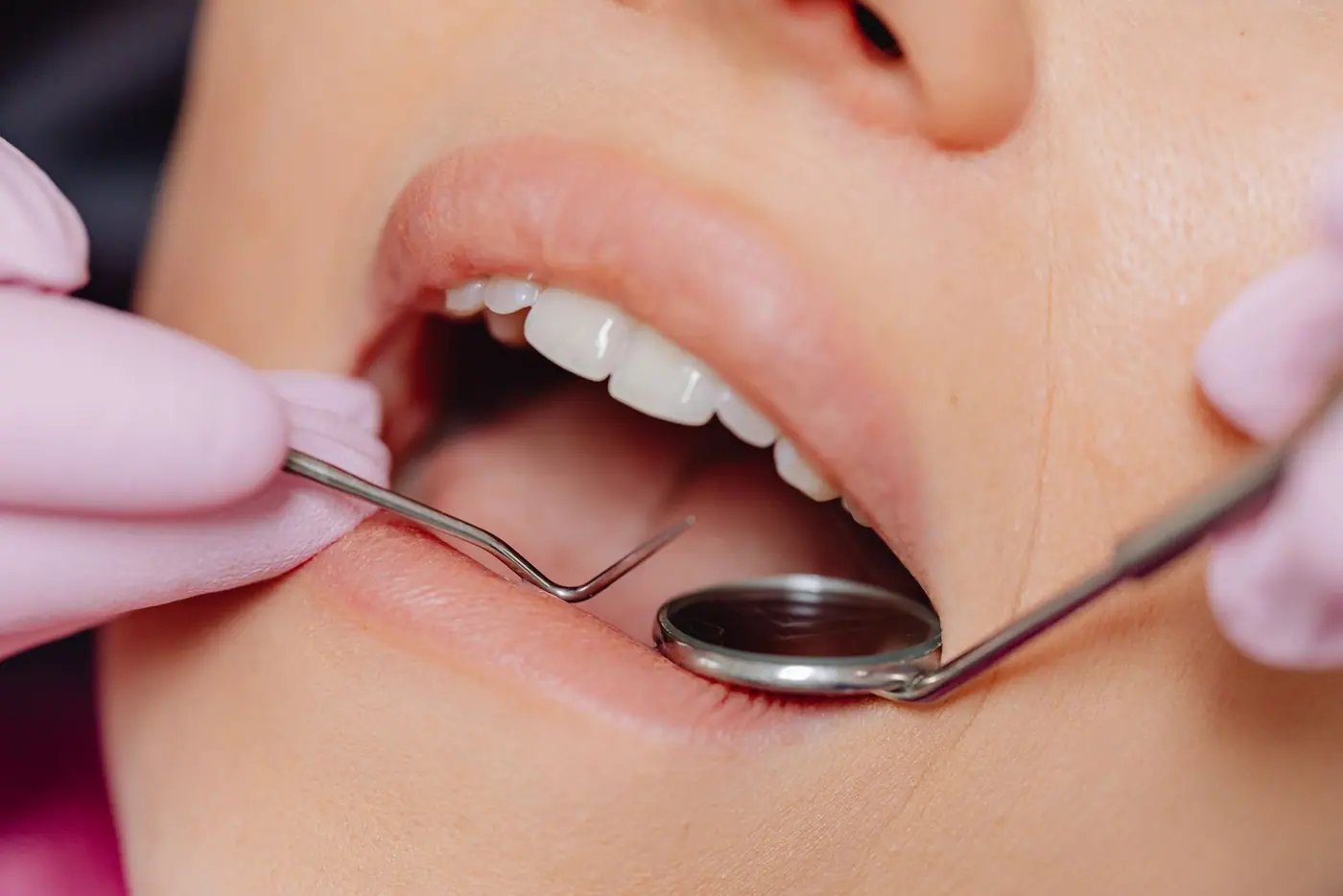
The EFP guideline recommends supportive peri-implant care to reduce recurrence and implant loss. Patients should be enrolled straight after the crown is fitted. Baseline probing depths should be recorded within three months of the restoration – they serve as a reference later.
Professional cleaning may use ultrasonic or air-polishing devices or hand instruments, depending on the situation.
How often should I have check-ups?
The EFP guideline does not set a fixed interval for healthy implants – it calls for regular, risk-based care. A meta-analysis on the effect of maintenance (Monje et al., 2016) suggests a minimum recall interval of 5 to 6 months, adjusted to individual risk. It also shows that complications can still occur with maintenance – check-ups lower the risk but do not eliminate it.
After treated peri-implantitis, the EFP recommends check-ups every 3–4 months in the first year, then tailored to the patient.
Everyday checklist
- Brush morning and evening, paying attention to the implant area
- Clean between teeth once a day
- Watch for bleeding gums – an early warning sign
- Keep recall appointments, even without symptoms
- Stop smoking – explicitly recommended by the EFP

Dr. Coşkun studied dentistry at Charité – Universitätsmedizin Berlin (graduated 2000) and worked as a dentist in Germany for around 20 years. He has placed more than 10,000 implants and now practises in Istanbul with a focus on implant dentistry.
Frequently asked questions
Do I need a special toothbrush for implants?
Usually not. Thorough brushing and cleaning between teeth – for example with correctly sized interdental brushes – matter more than a particular model. Have the size checked at the practice.
How often should I have professional cleaning?
That depends on your risk. One meta-analysis suggests at least every 5–6 months as a guide; more often with higher risk or after peri-implantitis.
Can my own dentist at home take over aftercare?
Yes. Regular check-ups and cleaning can be done at home. Bring your treatment records and implant passport.
Sources
The figures in this article come from the following studies and guidelines (research status: 8 October 2026):
- Herrera D et al. (2023): Prevention and treatment of peri-implant diseases – The EFP S3 level clinical practice guideline. J Clin Periodontol 50 Suppl 26:4–76. DOI 10.1111/jcpe.13823
- Monje A et al. (2016): Impact of Maintenance Therapy for the Prevention of Peri-implant Diseases: A Systematic Review and Meta-analysis. J Dent Res 95(4):372–379. DOI 10.1177/0022034515622432
- SDCEP – Prevention and Treatment of Periodontal Diseases in Primary Care: Dental implants / peri-implant mucositis
- Schwarz F et al. (2018): Peri-implantitis. J Clin Periodontol 45 Suppl 20:S246–S266. PMID 29926484
Diesen Artikel auf Deutsch lesen →
This article is for general information and does not replace a personal examination. Whether and which treatment is suitable for you can only be assessed after examination and a consultation.
You might also be interested in
 Treatment
Peri-implantitis: how to spot inflammation around an implant early – and prevent it
Inflammation of the surrounding tissue is the most common late complication of implants. What studies say about frequency and risk – and what you can do yourself.
 Treatment
How long does a dental implant last? What 10- and 20-year studies show
“Will an implant last a lifetime?” Long-term studies give the honest answer. We explain the figures – and why survival is not the same as success.
 Technology & materials
Ceramic or titanium implants? What the research on zirconia really shows
Ceramic implants are often described as “metal-free” and natural. What does the data show compared with titanium – and who are they suitable for?