Root Canal Treatment
 Dr. med. dent. Hasan Coşkun · Co-founder of LHC Clinic
6 min read · Deutsch
Root canal treatment saves a tooth whose inner tissue has become inflamed or infected, relieving pain while keeping your natural tooth in place. At LHC Dental in Istanbul, the treatment is planned with X-rays, and every step is explained to you before it begins.
What Is the Pulp?
To understand root canal treatment, it helps to know how a tooth is built. The outer layer is hard enamel, and beneath it lies dentin, a slightly softer layer. At the centre of the tooth is the pulp: a soft tissue made up of nerves, blood vessels and connective tissue. The pulp sits in the pulp chamber in the crown of the tooth and continues down through narrow channels inside each root, called root canals, to the tip of the root where it connects to the surrounding tissues.
The pulp plays an important role while a tooth is developing, supplying it with nutrients and allowing it to sense temperature and pressure. In a fully developed adult tooth, however, the tooth can remain healthy and functional without its pulp, because it continues to be supported by the surrounding gum and bone. This is what makes root canal treatment possible.

What Is Root Canal Treatment?
Root canal treatment removes inflamed or infected pulp tissue, cleans and disinfects the canals inside the root, and then fills and seals them. When the pulp is damaged, bacteria can multiply inside the tooth, causing pain and, if left untreated, spreading infection into the jawbone around the root tip. Root canal treatment eliminates the source of the infection, relieves the pain and allows the tooth to remain in your mouth, so that it can keep chewing normally and the gap and bone loss that follow an extraction are avoided.
When Is Root Canal Treatment Needed?
- Deep decay: When a cavity extends through the enamel and dentin into the pulp, bacteria can infect the tissue.
- Dental trauma: A strong blow can damage the nerve and blood vessels of a tooth, sometimes even without a visible crack.
- Repeated dental procedures: Several large fillings or crowns on the same tooth can irritate the pulp over time.
- Decay under old fillings: Decay that develops beneath an existing filling can reach the pulp unnoticed.
- Tooth abscess: An infection at the root tip can form a pocket of pus in the bone, which can usually be treated through the root canals.
Symptoms That May Indicate You Need a Root Canal
- Severe or throbbing toothache, sometimes waking you at night
- Sensitivity to hot or cold that lingers after the stimulus is gone
- Pain when biting or chewing
- Swelling of the gum, or a small pimple-like bump on the gum near the tooth
- Darkening or greyish discolouration of the tooth
Some infected teeth cause few or no symptoms and are discovered on an X-ray during a routine check-up. If you notice any of the symptoms above, it is best to see a dentist promptly, as early treatment is usually simpler.
How Is Root Canal Treatment Performed?
- Examination and diagnosis: Your dentist examines the tooth and takes X-rays to assess the root canals, the root tips and the surrounding bone.
- Local anaesthesia: The tooth and surrounding area are numbed so that the treatment is comfortable.
- Opening the tooth: A small opening is made in the top of the tooth to reach the pulp chamber.
- Removing the pulp: The inflamed or infected pulp tissue is removed from the chamber and the canals.
- Cleaning and shaping: Fine instruments clean and shape each canal, while disinfecting solutions rinse away bacteria and debris.
- Filling the canals: The cleaned canals are filled with a biocompatible material and sealed to prevent bacteria from re-entering.
- Restoring the tooth: The tooth is closed with a filling. A tooth that has lost a lot of structure often needs a crown to protect it from fracture.
Why it may take one or two sessions
Some teeth can be treated in a single visit, especially when the pulp is inflamed but the infection has not spread. In other cases, treatment is divided into two or more sessions. This is common when there is an active infection or abscess, when there is swelling or drainage from the tooth, when the canals are curved, narrow or numerous, or when symptoms are severe.
Between visits, the dentist places an intracanal medicament inside the cleaned canals. This is an antibacterial dressing, often based on calcium hydroxide, that stays in the canals for usually one to a few weeks. It continues to reduce bacteria in areas that instruments and rinsing cannot fully reach and helps calm inflammation around the root tip. The tooth is sealed with a temporary filling during this time. At the next visit, the medicament is rinsed out and, once the tooth is free of symptoms, the canals are permanently filled. Taking this extra step when needed gives the tooth the best conditions to heal.
Aftercare Following Root Canal Treatment
- Wait until the anaesthesia has worn off before eating to avoid biting your cheek, lip or tongue.
- Expect some tenderness. Mild discomfort when biting is common for a few days and usually fades gradually.
- Take painkillers as advised by your dentist if needed.
- Avoid chewing hard or sticky foods on the treated tooth until the final filling or crown is in place, as a temporary filling and a weakened tooth can break.
- Keep up good oral hygiene with regular brushing and daily flossing, being gentle around the treated tooth.
- Have the crown placed on time if your dentist recommends one, so the tooth is protected.
- Attend follow-up appointments. Your dentist may take X-rays later to confirm that the area around the root is healing.
Contact your dentist if you notice swelling, severe pain or a loose temporary filling.
Why Choose LHC Dental for Root Canal Treatment?
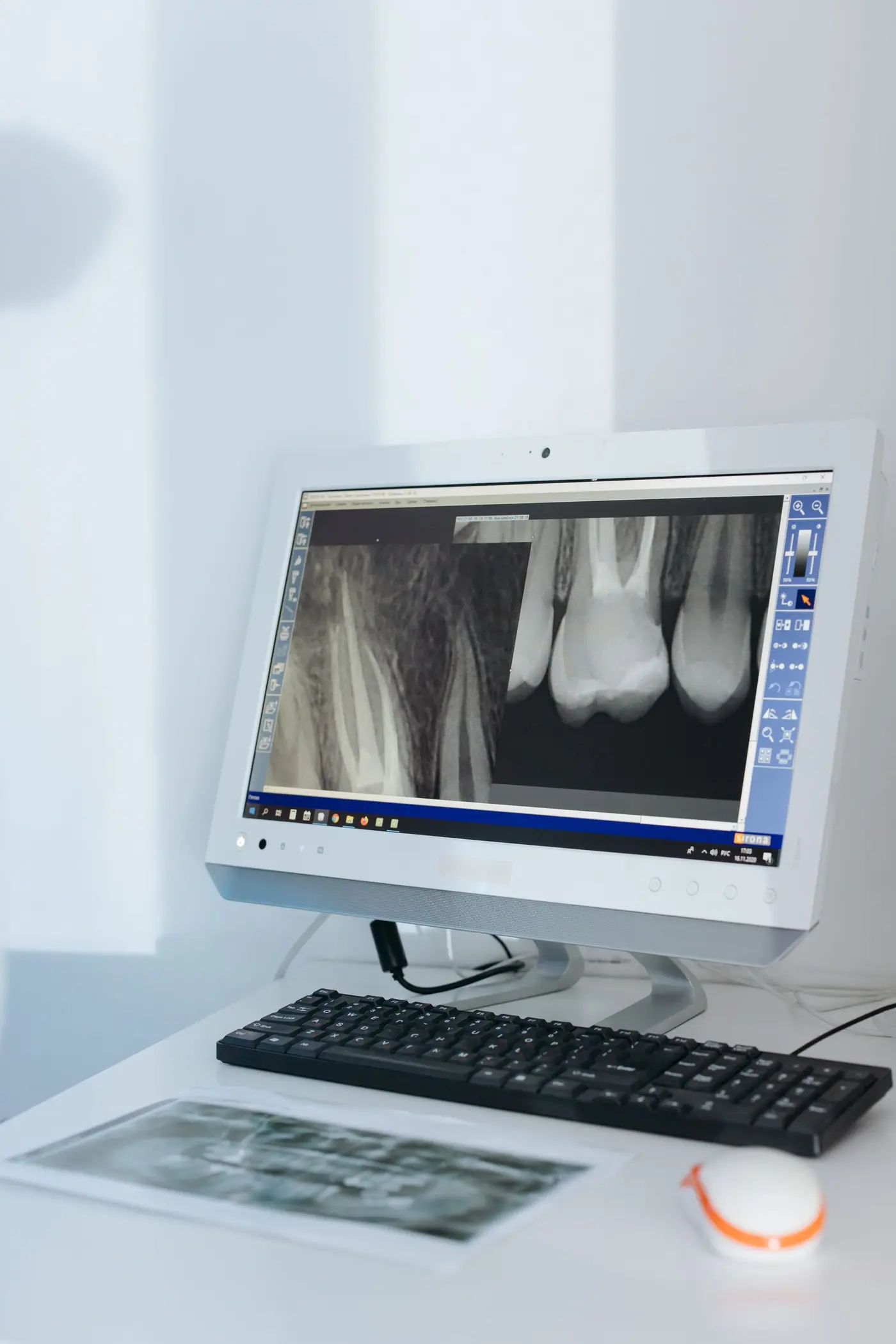
At LHC Dental, root canal treatment begins with a thorough diagnosis using X-rays, so that the number and shape of the canals can be assessed before treatment starts. Your dentist explains whether your tooth is likely to need one or more sessions and why, which is especially helpful if you are travelling to Istanbul for treatment and need to plan your stay. After the canals are filled, the restoration of the tooth, whether a filling or a crown, is planned as part of the same treatment, and you receive clear aftercare instructions for when you return home.
Frequently Asked Questions
Is root canal treatment painful?
The treatment is carried out under local anaesthesia, so most patients feel little more than pressure. Afterwards, mild sensitivity or tenderness when biting is common and usually settles within a few days. In many cases, the treatment relieves the strong pain caused by the infection.
How long does root canal treatment take?
It depends on the tooth and its condition. A single session may be enough for straightforward cases, while teeth with an active infection or complex canals usually need two or more visits, with a medicament placed in the canals in between.
How long does a root canal-treated tooth last?
With good oral hygiene, regular check-ups and a suitable restoration, a root canal-treated tooth can last for many years. Because the tooth can become more brittle, a crown is often recommended, especially for back teeth.
Should I choose root canal treatment or tooth extraction?
When a tooth can be saved, keeping it is usually the better choice. Your natural tooth maintains your bite, keeps the bone around it and avoids the need for an implant, bridge or denture. Extraction may be considered when the tooth is too damaged to restore, is cracked into the root or has very little bone support. Your dentist will explain which option makes more sense for your tooth.
Can a tooth need root canal treatment again?
Occasionally, yes. If bacteria remain or re-enter the tooth, for example through new decay or a leaking restoration, the infection can return. In such cases, the root canal treatment can often be redone (retreatment). Regular check-ups help identify problems early.
This page is for general information and does not replace a personal examination. Whether a treatment is suitable for you can only be assessed after an examination and consultation.